
What is SEO, How Does it Work
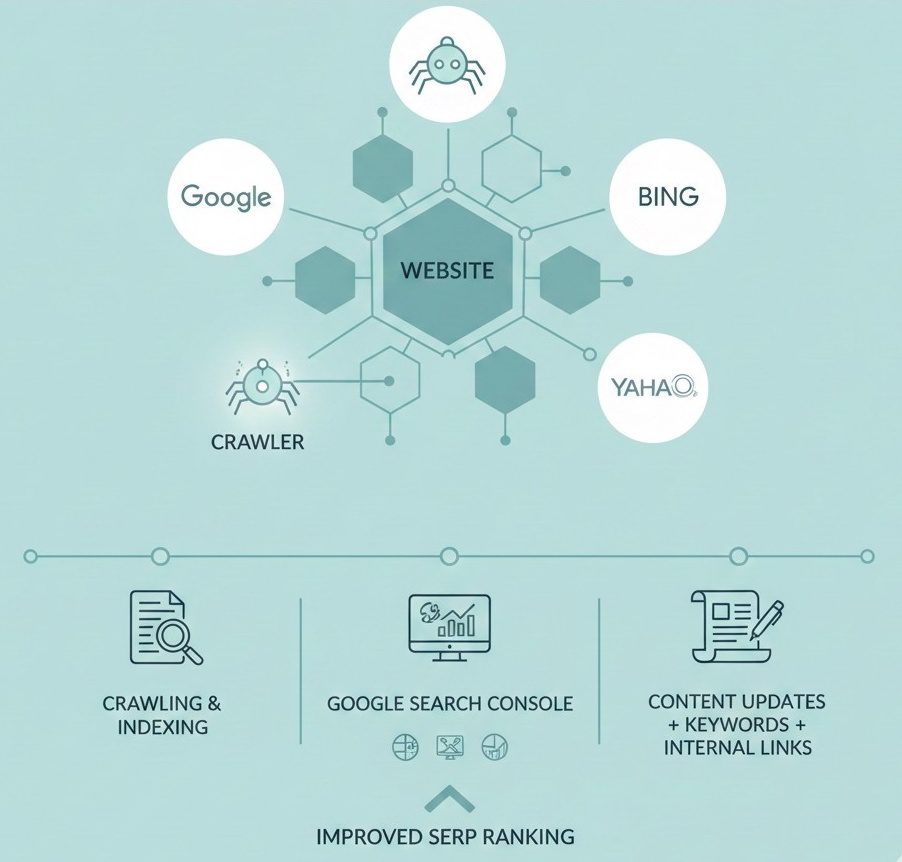
When I first started with digital marketing, I quickly realized that SEO or search engine optimization is the backbone of any online presence. A well-optimized website with clear site structure and properly organized web pages can drastically improve visibility and ranking on search engines like Google, Bing, and Yahoo. The key lies in understanding how crawlers or spiders navigate through your content, performing crawling and indexing. Using tools like Google Search Console, you can monitor indexing coverage, fix crawl errors, and ensure your XML sitemap guides search engine bots efficiently. Personally, I noticed that regularly updated content, keyword-rich headings, and proper internal linking were game-changers for improving SERP positions.
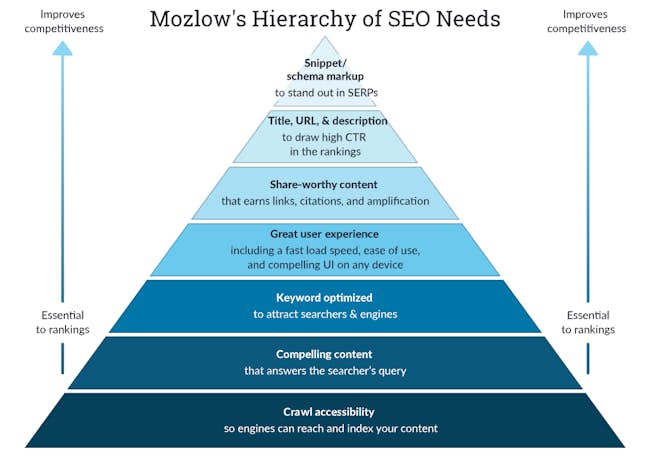
Mozlow's Hierarchy of Needs
In my experience as a digital marketer, understanding SEO or Search Engine Optimization is the first step to improving your website ranking and visibility. When you focus on organic search, free search, or editorial search, your traffic from search engines like Google or Bing naturally increases. A well-planned content strategy and brand visibility help people find your site in search results and improve your website position in SERPs. I’ve often referred to the graphic by Rand Fiskin, the co-founder of Moz, which illustrates Maslow's Hierarchy of Needs through the pyramid. Fishkin calls it Mozlow's Hierarchy of SEO Needs, and it perfectly shows how to execute SEO effectively.
Building on that, SEO now goes beyond search engines. Platforms like YouTube and TikTok allow people to discover information in new ways, and social networks play a key role in discoverability, platform engagement, and expanding your digital presence. The idea is to combine search engine optimization with strategy so that your content reaches the right audience and maximizes brand visibility. This shift highlights the importance of adapting to trends in digital marketing while keeping the core principles of SEO intact.
Optimizing web pages isn’t just about structure; it’s also about user experience or UX. From page speed and mobile responsiveness to responsive design and clear URL structure, every element matters. Implementing meta tags, meta titles, meta descriptions, header tags (H1, H2, H3), and avoiding duplicate content can dramatically improve click-through rate (CTR) and search performance. Pairing on-page SEO with off-page SEO strategies like backlinks, link building, and domain authority (DA) improvement can boost organic traffic without relying solely on paid ads. Over time, I also learned that understanding user intent, search behavior, and search patterns helps in creating high-quality, relevant content that aligns with both algorithms and readers.
A successful SEO strategy combines multiple elements, from technical SEO and structured data like schema markup to competitive analysis and SEO audits using tools like Moz, SEMrush, and Ahrefs. Maintaining content freshness, performing website audits, and tracking SEO metrics ensures organic growth, better website visibility, and stronger domain relevance. Whether you run a blog, an online store, or a local business, monitoring SEO ranking, optimizing page layout, and focusing on content discoverability and site navigation has always been my go-to approach. Following SEO best practices, staying updated with algorithm updates, and implementing a solid SEO content plan can make any business website stand out in search results while improving overall website SEO and online marketing performance.
How do search engines actually work?
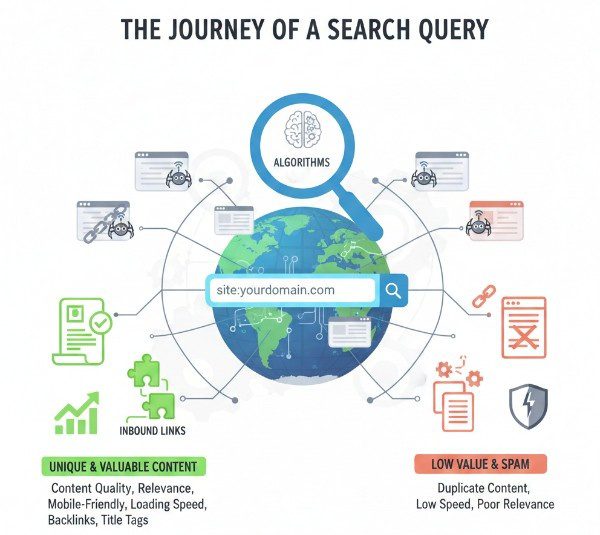
From my hands-on work with search engines, I’ve seen how people type a query while searching online for an answer, and how search engine algorithms act like computer programmes that follow clues to help searchers find exact results from billions of web pages that rank based on a keyword and constant Google algorithm updates that have an impact on brands, marketers, and even social media algorithms through crawling, indexing, and ranking, where web crawlers discover new pages, record information, and behave like spiders, robots, and Googlebots scanning content that was previously visited or updated, following links from a blog, homepage, or blog post to store data in an index or database, rewarding unique content and valuable content while filtering duplicate content, low value, or spammy pages, and using inbound links, checks like site:yourdomain.com in the search bar, the Index Coverage report inside Google Search Console, plus technical optimization, on-page optimization, and off-page optimization such as title tag usage, synonym handling, loading speed, mobile-friendly design, website reputation, backlinks, content quality, relevance, target audience focus, mobile friendliness, content marketing, paid media, agency support, and insights I’ve even seen applied at Neil Patel Digital.
How does Google order and rank search results?
In practice, Google uses advanced algorithms like Hummingbird, Panda, and RankBrain to order and rank search engine results, relying on a machine-learning based algorithm and artificial intelligence to understand search queries through word vectors, search intent, keywords, topics, and concepts, so each optimized result improves user satisfaction while aligning with EEAT, meaning Experience, Expertise, Authoritativeness, and Trustworthiness, as defined in the Search Quality Evaluator Guidelines, and now expanded with the Google Multitask Unified Model, MUM, alongside tools like AI-chatbot, Google Bard, and Gemini.
How to get the most out of RankBrain SEO strategy
To win with How to get the most out of RankBrain SEO strategy, I always optimize website flow around user experience and satisfaction, because RankBrain ranking factor favors intent-rich long-tail keywords, medium-tail keywords, and clear key terms written in natural language, supported by relevant content and valuable content, strong page titles and descriptions that lift click-through rate, keep visitors longer by improving dwell time, lowering bounce rate, and boosting engagement with videos, images, expert quotes, and practical tips.
What Are the Three Pillars of SEO?
In practice, every digital marketer needs to focus on the three pillars of SEO to improve top performance for a brand, company, or website. Technical optimization involves activities behind the scenes, like sitemap submission to search engines, ensuring your site is ready for indexing. On-page optimization focuses on relevant content, keywords, user experience, and using a content management system like WordPress, Wix, Drupal, Joomla, Magento, or Shopify. Off-page optimization strengthens your site reputation with high-quality backlinks, boosting search engine rankings and enhancing site authority. Keeping up with SEO changes, concepts, and the SEO evolution ensures you maintain your core skills and consistently help searchers find your content.
What is an SEO strategy?
SEO is part of digital marketing where I help a small business get found by people in their area and beyond. An SEO strategy is a clear strategy to implement, track, and tweak actions so a website and each page are ranked higher on search engines like Google. The goal is to boost organic traffic by optimizing content around keywords and terms that match user intent. From my experience, the most successful work starts when we align with business objectives, involve stakeholders, formulate clear objectives, set goals, and choose metrics to measure progress and performance over the long term.
How to set objectives for your SEO strategy
Clear objectives are a vital and important element of SEO. I always ensure objectives align with business objectives and the target audience, using data from search engines, social media, and the site to see how it ranks and gains visibility online. At the Top of the Funnel, TOFU, we aim to increase visitors from organic search results; an indicator is higher rankings on the SERP (Search Engine Results Page), more queries, higher time spent per page, and valuable, informative content. In the Middle of the Funnel, MOFU, I watch engagement rate, likes, shares, comments, high click-through rate, CTR, and brand awareness, recognition, and recall for products and services. At the Bottom of the Funnel, BOFU, stronger domain authority helps predict how we rank, improving leads, revenue, loyalty, and results from ongoing activities and efforts.
Examples, business types, and career view
When setting SEO objectives, I use KPIs that are realistic, with modest ambition, based on existing data to avoid disappointment—for example, moving top 20 keywords to the first page of Google in nine months, improving keyword ranking year-on-year, or increasing organic website traffic in quarter three and quarter four to grow market share in a financial year. Different objectives need focus: transactional and e-commerce sites push sales and lead conversions, while informational or non-ecommerce commercial site goals include lead generation, brand awareness, and website traffic. A solid SEO strategy is implemented as a foundation of tactics; it’s a long game needing patience, strong user experience, and steady conversions. As an SEO career, this skill is in high demand across companies and industries—even healthy living brands—backed by Conductor’s The State of SEO 2025 report, where 91% of marketers said SEO positively impacted website performance, marketing goals, and made brand awareness a top priority across roles.
Why SEO is Important
From my experience working with websites, SEO plays a crucial role in making your website visible to the right people. It drives traffic, improves user experience, and ensures your content, products, and services stand out in search results. Unlike paid advertising, the optimization efforts you put into SEO are sustainable and grow over time, helping your ranking go higher and attracting more clicks from users who are actively searching. I’ve seen firsthand how maintaining consistent SEO practices can improve quality traffic while ensuring user retention and satisfaction.
Rank for More SERP Features
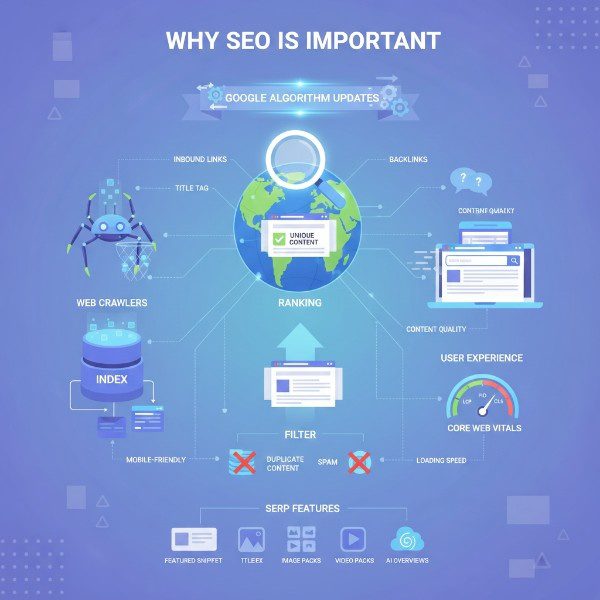
An often-overlooked advantage is how SEO helps your content appear in traditional search engine results and SERP features. Featured snippets provide quick answers at the top, improving click-through rates, while People also ask (PAA) addresses related user questions, positioning your page as an authoritative resource. Image packs and video packs display visual content, boosting engagement and multimedia interaction. Additionally, generative search tools like AI overviews use AI algorithms to create summaries of web pages, giving users answers without needing to click multiple links. Platforms like ChatGPT and Claude AI, as well as research from Ziff Davis, show that LLMs such as OpenAI prefer content from authoritative websites, so optimizing your site increases the chances of appearing in these features.
Providing a Great User Experience
SEO goes hand-in-hand with user experience, which is why websites must prioritize being fast, mobile-friendly, and easy to navigate. Core Web Vitals measure performance metrics to ensure page experience is smooth. Loading performance determines how quickly page content appears (Largest Contentful Paint), while interactivity ensures users can engage without delay (First Input Delay). Visual stability prevents layout shifts (Cumulative Layout Shift) so elements stay stable, helping users interact confidently. When I implemented these practices, I noticed more clicks, longer retention, and overall satisfaction.
What are the types of SEO?
When I first started working on SEO, I realized that optimizing a site isn’t just about one thing—it involves multiple types and focus areas. The main types include On-page, off-page, and technical SEO, each with unique tasks and goals. On On-page SEO, your goal is to improve user experience by carefully organizing pages, content, and HTML elements. Ensuring alignment with best practices, using keyword optimization with relevant keywords in titles, headers, and body content, and understanding search intent can dramatically increase click-through rates from search results. Paying attention to meta tags, title tags, meta descriptions, multimedia like images, videos, and infographics, and using alt text helps enrich the content and keeps visitors engaged.
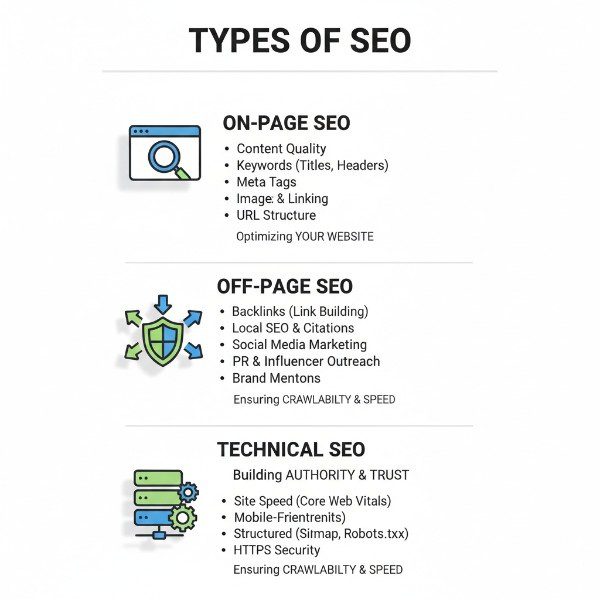
Let’s break down every type of SEO from your content in simple English, keeping it clear, detailed, and practical. I’ll focus on On-page, Off-page, and Technical SEO, explaining what they are, why they matter, and what’s involved.
On-page SEO
On-page SEO is all about optimizing your own website pages to make them easier for search engines to understand and for users to enjoy. This includes content quality, keyword optimization, and HTML elements like titles, headers, and meta tags. Good On-page SEO ensures your pages align with search intent, helping visitors find exactly what they need. You also focus on multimedia, like images, videos, and infographics, using alt text to enrich content. Internal linking connects related pages, and URL structure ensures clear URLs that reflect page content. Essentially, On-page SEO is your way of organizing everything inside your site to boost visibility, engagement, and rankings.
Off-page SEO
Off-page SEO focuses on actions outside your website that improve its authority and credibility. The most common method is link building, where you earn backlinks from authoritative sites through outreach, guest blogging, and content promotion. It also includes citations—making sure business information is consistent across directories—and using social media marketing on multiple platforms to attract links and drive engagement. Activities like PR, influencer outreach, and brand mentions help signal authority to search engines. For local businesses, local SEO involves creating local business profiles and adding unstructured citations, which make it easier for nearby customers to find your business. In short, Off-page SEO is about building trust and visibility outside your own site.
Technical SEO
Technical SEO ensures that search engines can crawl, index, and rank your site efficiently. It’s about the site architecture, speed, and overall user experience. You optimize Core Web Vitals—loading speed, interactivity, and visual stability—to enhance how people use your site. Mobile-friendliness and responsive design make browsing seamless on all devices. Structured data and schema markup help search engines understand your content better, while indexing management using robots.txt, canonical tags, and XML sitemaps guides search engine crawlers. Security is also key: using HTTPS protects user data and builds trust. Technical SEO forms the backbone of your site, ensuring that both users and search engines can navigate it easily.
Paid search vs. organic search - the differences and similarities
In my experience working with websites, understanding paid search and organic search is crucial for mastering SEO. The key differences between these two approaches start with position on search engine results pages. Paid ads or sponsored posts usually appear at the top, while organic search results sit beneath them. Tools like Google's AI Overviews are changing display advertising and SEO activities, so keeping up with these developments is essential for both natural search and paid campaigns. When considering time, paid search can deliver quick results, but organic traffic requires a long-term strategy spanning weeks, months, or even years, meaning you must play the medium-term and long-term game.
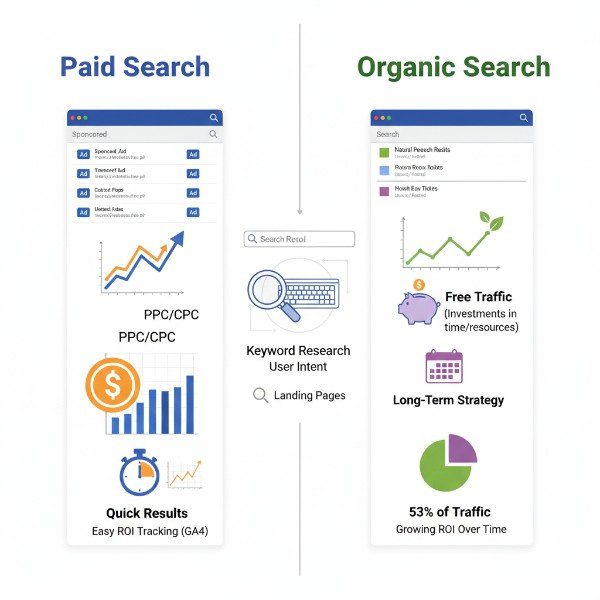
When it comes to payment, paid search uses pay-per-click (PPC) or cost-per-click (CPC) models, charging a fee for each user click on your ad. In contrast, organic traffic is essentially free traffic, though it demands investment of resources and time to build landing pages that are connected to your website. Sometimes, you may need an exact same page for paid search and organic search, or a separate stand-alone page depending on your strategy. The goal is generating traffic that aligns with user intent, where the user is in an active mindset, asking questions, seeking information, and ready to take action.
From a performance perspective, ROI or return on investment is easier to measure for paid search thanks to keyword data in Google Analytics (GA4). However, ROI can stagnate or decline over time with paid campaigns. Organic search improves gradually, often providing a good return in the long-term. In terms of share of traffic, BrightEdge reports that organic search accounts for 53% of site clicks, while paid search drives around 15%, showing that the lion’s share of traffic still comes from natural search. Effective keyword research using a search engine and thoughtful landing pages are crucial for both, and understanding the similarities ensures that every SEO activity maximizes results.
How to do SEO: Best practices for beginners
Keyword Research and Understanding Audience
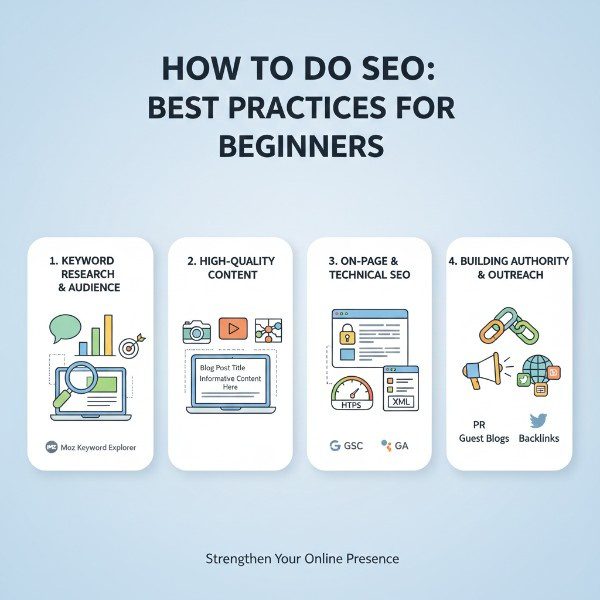
When I first started in digital marketing, I quickly realized that SEO is more than just adding keywords to your content. It’s about understanding your audience, analyzing traffic sources, and improving site visibility across search engines. My approach always starts with keyword research using tools like Moz Keyword Explorer, Moz, MozBar, and Moz DA Checker. I identify seed keywords, long-tail keywords, and high-value keywords that fit my core topics while considering search intent, commercial, and transactional content. Mapping these target keywords to content needs ensures that every page has relevant content optimized for CTR, click-through rates, and conversion performance.
Creating High-Quality and Shareable Content
Creating high-quality, shareable content is my next step. I focus on original content, content creation SEO, and informative content that answers users queries. Each piece is structured with clear headings, paragraphs, and alt text for images, videos, and infographics, helping both users and search engines understand the topic. While writing, I constantly update content updates, check relevancy metrics, and ensure real value. I also pay attention to anchor text and links opportunities, contributing to a healthy backlink profile from authoritative blogs and relevant websites. Occasionally, I replace broken links to maintain a strong domain authority.
Optimizing On-Page SEO and Technical Elements
Optimizing on-page SEO involves fine-tuning meta descriptions, title tags, and URLs to include keyword-rich phrases. I also monitor indexing issues, search performance, and site visibility through Google Search Console and Google Analytics, which helps me analyze, strengthen, and improve existing efforts. Observing user behavior informs adjustments, letting me optimize navigation, browsing, and exploratory aspects of the website. For beginners, following these best practices and using keywords tools can help engage, attract, and perform effectively in a competitive niche.
Building Authority with Links and Outreach
Finally, building a presence is not complete without PR campaigns, media outreach, and publishing on blog posts or authoritative sites. Consistently creating valuable content, maintaining a strong backlink profile, and keeping structured, optimized, and informative content across the website ensures relevancy, competitive advantage, and measurable insights tools. Over time, these steps strengthen your foundation, improve search results, and make your SEO efforts truly helpful for both users and search engines.
FAQs
Can you do SEO by yourself?
Yes, you absolutely can do SEO yourself. Read the free resources we linked to above, take the free course, and use the free trial to implement what you’re learning on the go. Like every skill, you get better at SEO by practicing on live websites.
Is SEO free or paid?
SEO is free, but it requires time and effort to implement effectively. Paid tools and services, such as keyword research tools, analytics platforms, and professional consulting, can also assist with SEO.
What is an example of SEO?
An example of SEO is optimizing a website's title tags and meta descriptions to include relevant keywords, which increases its likelihood of ranking for those search queries.